From a slow leak behind the drywall to a full basement flood, Oxford property owners call Aqua Guard Water Damage because we show up with the right gear the first time — no guesswork, no upsells at the door.
Call +1-844-578-1604 Now
Aqua Guard Water Damage built its Oxford operation around one standard: arrive fast, document everything with moisture readings and thermal imaging, and communicate the drying plan in plain language before we touch a single wall.
Being local to Oxford means our estimators know the going rate for drywall and flooring replacement in your area, so the quote you get reflects your market instead of a national average that never quite matches your invoice.
We also carry direct experience working alongside insurance adjusters, so the documentation we generate on day one is already formatted the way most carriers expect to see it.

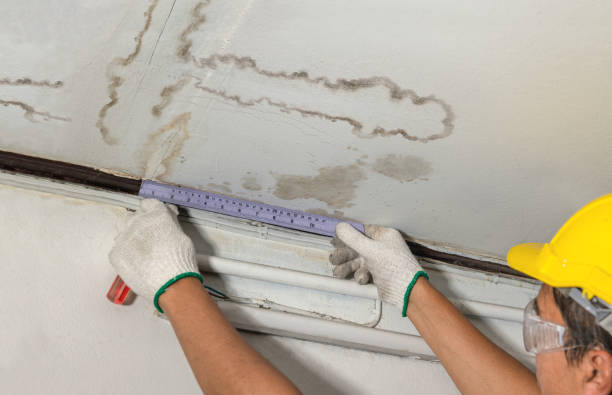
Ceiling stains near a bathroom or kitchen almost always trace back to a plumbing failure rather than a roof leak, which means the source is often closer and easier to fix than homeowners assume.
If opening windows and running a fan doesn't clear the smell within a day, the moisture source is still active and needs professional extraction, not just ventilation. A smell that returns after cleaning is a strong sign the moisture is still present.
Tile that suddenly sounds hollow when you tap it often means the mortar bed underneath has been sitting in moisture long enough to lose adhesion. That hollow sound rarely resolves on its own.
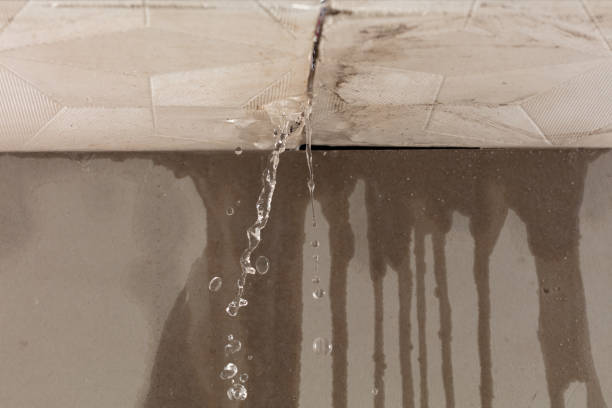
If your usage climbs but nothing in your household routine changed, a hidden leak behind a wall or under the foundation is worth investigating immediately, since slab leaks rarely announce themselves any other way.
Bubbling near a window or exterior wall frequently points to a flashing or seal failure letting water into the wall cavity a little at a time.
Any visible mold, even a small patch in a corner or along a baseboard, means conditions behind that surface have supported growth for a while and the moisture source needs to be found, not just the mold wiped away.
We treat Water Damage Repair as one continuous job rather than a series of handoffs — the crew that extracts the water is accountable for the drying results, and the drying results determine what reconstruction is actually needed.
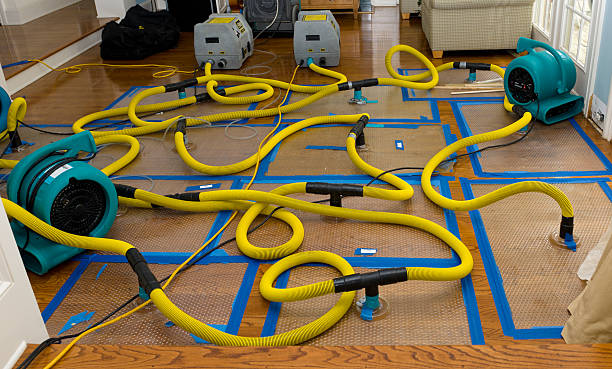
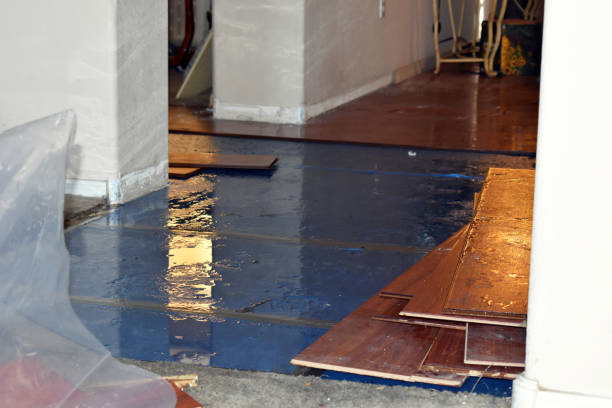
We prioritize extraction speed above everything else in the first hour, because every additional hour standing water sits raises the odds of secondary damage to subfloors and framing.
Drying logs track humidity, surface moisture, and airflow at every checkpoint, so you get documented proof the structure is dry before we close out the job — useful for your insurance claim too.
Blackwater jobs get treated with extra caution, since porous materials that touched contaminated water almost always need to be removed rather than dried in place.
Because mold can establish in as little as 48 hours, our drying timeline is built around beating that window rather than treating mold prevention as an afterthought.
Once the structure tests dry, our reconstruction team handles drywall, insulation, flooring, and trim so you're not managing a second contractor after the restoration crew leaves.
Furniture, documents, and electronics affected by water intrusion get assessed on-site, with salvageable items cleaned and stored while unsalvageable items are documented for your claim.


A real person answers, gathers the details of your water loss, and routes the closest available crew immediately.
We document the loss with photos and moisture readings before touching anything, which also protects your insurance claim.
We set drying equipment based on the specific moisture readings taken during assessment, not a generic placement pattern.
Final verification is where a lot of shortcuts get taken industry-wide — we treat it as mandatory, not optional.
Insurance and licensing aren't just paperwork here — they're what let us stand behind the work if something doesn't go as planned.
Local staging means shorter drive times, which matters most in the first hour after a water loss.
You get a written estimate before work begins, not a surprise invoice after the drying equipment is already running.
We stand behind every job with a documented re-inspection before we consider the work complete.
We'd rather run drying equipment an extra day at our own cost than close out a job with a moisture reading we're not confident in.
That same standard applies whether it's a single flooded bathroom or a full commercial loss — the sign-off criteria don't change based on job size.
Call +1-844-578-1604Whether your address falls in 19363 or one of the neighboring zip codes we cover, the same crew and the same response standard applies.
We track call volume by zip code across Oxford to keep crew staffing matched to where emergencies actually happen most often.

"The team here in Oxford treated our emergency like it actually mattered, not like another ticket in a queue, and the drying documentation they left us was thorough enough to hand straight to our insurer."
James R., Oxford"Our basement took on water during a storm and the crew classified it, extracted it, and had dehumidifiers running the same afternoon. The final invoice matched the upfront quote exactly."
Denise M., Oxford"Professional from the first phone call to the final walkthrough. They re-tested moisture levels before closing the job instead of just eyeballing it."
Marcus T., Oxford"The reconstruction crew matched our original flooring almost perfectly after the water damage repair — you'd never know there was a leak."
Priya S., Oxford"We had a slow leak we didn't notice for weeks and the crew found moisture in places we never would have checked using thermal imaging."
Carlos V., Oxford"They minimized business disruption by sectioning off the wet area instead of shutting down the whole space during drying."
Angela F., Oxford"The tech explained exactly which boards needed to come out and which ones tested dry enough to keep, so we didn't pay to replace more than necessary."
Tyrone B., Oxford"They explained the sump discharge issue causing our crawl space flooding in plain terms and fixed it as part of the same visit instead of scheduling a separate appointment."
Wendy K., Oxford